Best Tattoo Cover Up Ideas: A Real Guide
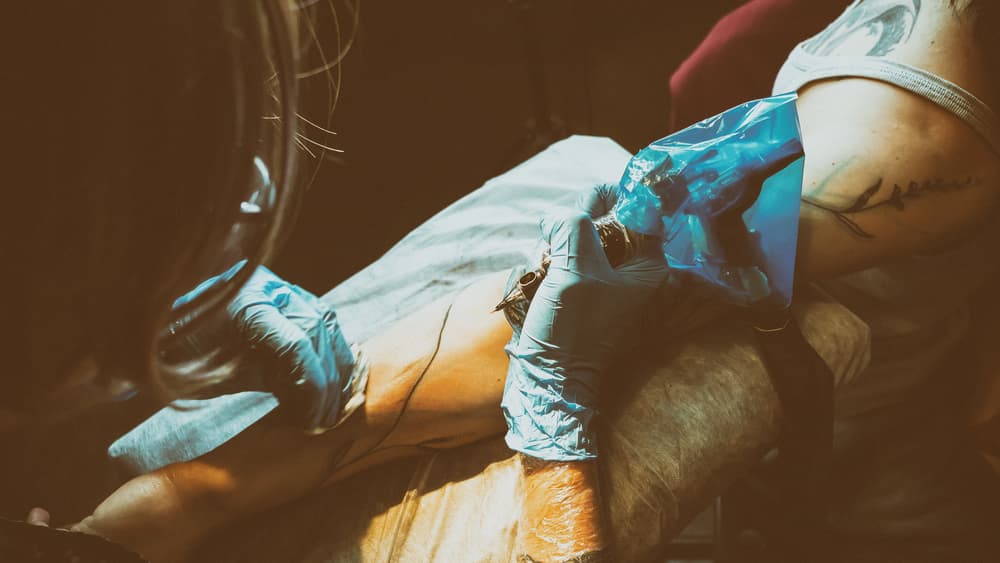
The best cover up ideas aren't the ones you find on a Pinterest board. They're the ones built around what's actually sitting on your skin right now — the size, the color, the age of the ink, and how much darker or bigger the new piece needs to be to bury it for good. Anything else is just guessing.
We do a lot of cover up work at American Tattoo Society, and not by accident. Studios like our shop in Fayetteville, NC — near Fort Bragg, our location in Jacksonville, NC — near Camp Lejeune and MCAS New River, and our studio near Naval Station Norfolk in Norfolk, VA sit right outside communities where people move every few years, change duty stations, change relationships, and change their minds about tattoos they got at nineteen. If you're going to run a shop near a base, cover ups aren't a specialty. They're a huge chunk of the daily work.
Why Cover Ups Are Different When You Work Around a Military Base
Civilian shops in a college town might see a handful of cover ups a month. Around a base, it's a different rhythm entirely. People PCS in from Fort Bliss or Fort Drum with tattoos from three or four artists across three or four states, and a lot of that ink is old, faded, or was never great to begin with.
You also get pieces tied to units, relationships, or duty stations that no longer make sense. Someone gets out, gets promoted, gets divorced, or just grows past who they were at their first duty station. That tattoo doesn't go away on its own, so it either gets covered or lived with.
An artist working in this environment has to be comfortable covering blowouts, scar tissue, faded tribal work from the 2000s, and names — lots of names. That's a different skill set than doing clean line work on bare skin, and it's one you build through repetition, not theory.
What Actually Makes a Good Cover Up Design
A good cover up design starts with an honest look at the old tattoo, not with what the client saw on Instagram. If the existing ink is dark, dense, or heavily saturated, the new design has to be built to sit on top of that — which usually means more black, more shading, and often a design that's meaningfully larger than the original in every direction.
This is the part people don't want to hear during a consult: your cover up will almost always need to be bigger than what's already there. Sometimes a lot bigger. The old ink doesn't disappear just because you want it to — it gets absorbed into a new design that's dense enough to hide it.
Working With Dark, Dense, or Scarred Ink
Solid black tribal, thick lettering, and old blowouts are some of the toughest starting points because the pigment is already sitting deep and spread out. A skilled artist will map the darkest zones of the old tattoo first and build the new design's shadows and solid black areas right on top of them, so the eye lands on the new piece instead of searching for the old one.
Scar tissue changes how ink sits in the skin, so an artist needs to look closely at texture, not just color, before committing to a design. This is one of those situations where a phone consult only gets you so far — an in-person look matters.
Size and Placement Realities
Placement plays a bigger role in cover ups than most people expect walking in. A small tattoo on the inner forearm might need to wrap onto the outer arm to give the design room to actually work. A faded piece on the shoulder blade might need to extend toward the back or down the arm to build in enough coverage.
If you're active duty, this is also where you talk to your artist about your branch's tattoo policy before finalizing size and placement. Policies differ by service and change over time, so don't rely on what a buddy told you — confirm current guidance with your command before you commit to a design that grows past what you expected.
Best Cover Up Ideas By Situation
Every cover up is different, but most of what walks through the door falls into a handful of categories. If you're looking at the reference images alongside this section, you'll notice a pattern: the strongest cover ups almost always lean into more black, more depth, or a completely different style than the original piece, not a lighter version of the same idea.
Old Unit or Duty Station Tattoos
These are some of the most common requests we see at our locations near Fort Bragg and Camp Lejeune. Someone got a unit tattoo early in their career, changed units or branches, and now wants something that reflects where they are now instead of where they started. Bold American traditional pieces, blackwork panels, and Japanese-influenced designs all work well here because they can absorb dense old linework without looking cluttered.
Name and Relationship Tattoos
Names are probably the single most requested cover up we do. The good news is names are usually manageable to cover because most are moderate in size and sit in predictable spots like the forearm, chest, or upper arm. Florals, script replacements, portraits worked into a larger scene, or solid geometric patterns all give an artist enough room to fully absorb the lettering.
Faded or Amateur Blackwork
A lot of guys come in with tribal work, barbed wire bands, or old-school flash pieces done young that just haven't aged well. These respond well to being folded into larger blackwork or neo-traditional designs, since the artist can use the existing dark areas as the foundation for new shading instead of fighting against them.
Small Tattoos That Just Don't Fit Anymore
Not every cover up is emotional. Sometimes it's just a small, dated tattoo that doesn't match the rest of someone's collection anymore. These are usually the most flexible jobs on the list, since there's more skin to work with relative to the size of what's being covered, and more room for the artist to bring in color, detail, or a completely different style.
If you want a closer look at how these categories play out in real work, our cover up work page goes deeper on how we approach these jobs by design type.
What to Bring to Your Consult
Come in with clear photos of the tattoo in natural light, front-on and from an angle, so the artist can see how the ink sits and how it's aged. If you have a rough idea of style — traditional, blackwork, realism, whatever you're drawn to — bring reference images, but stay open to the artist telling you it needs to be bigger or bolder than you pictured.
It also helps to know your timeline. Duty stations change fast, and if you're PCSing soon, say so up front, since some cover ups take more than one session depending on size and how much the old ink is fighting you.
If you're weighing a cover up against laser removal first, our guide to tattoo removal versus cover up options breaks down when each route actually makes sense.
Aftercare on a Cover Up
Cover ups go through the same skin as any new tattoo, but there's often more trauma involved from the extra passes needed to build density over old ink. Keep it clean, keep it moisturized, and follow whatever aftercare routine your artist walks you through at the end of your session — general good practice, nothing exotic.
If you're active duty and heading back to field conditions soon after your appointment, tell your artist during the consult so they can plan the session and the healing window around your schedule instead of finding out the week you're supposed to be in the field. For more on healing a fresh tattoo, check our tattoo aftercare guide.
Ready to Talk Through Your Cover Up
If you've got an old tattoo you're ready to deal with, the next step is simple: come in for a consult and let an artist actually look at it in person. Photos help us prep, but nothing replaces seeing the ink under real light.
Book a cover up consult at our Fayetteville, NC location near Fort Bragg, our Jacksonville, NC studio near Camp Lejeune and MCAS New River, our Norfolk, VA shop near Naval Station Norfolk, or our Fort Bliss, TX or Fort Drum, NY locations. Bring your photos, bring your timeline, and we'll build a design that actually gets the job done.
Have A Tattoo Idea?
Start a Tattoo Talk and a real ATS artist answers — free, no retainer, no commitment.


