What to Know Before You Book a Blackwork Tattoo Artist in Fayetteville NC
August 6, 2026·By Fayetteville NC Blackwork Tattoo Artist
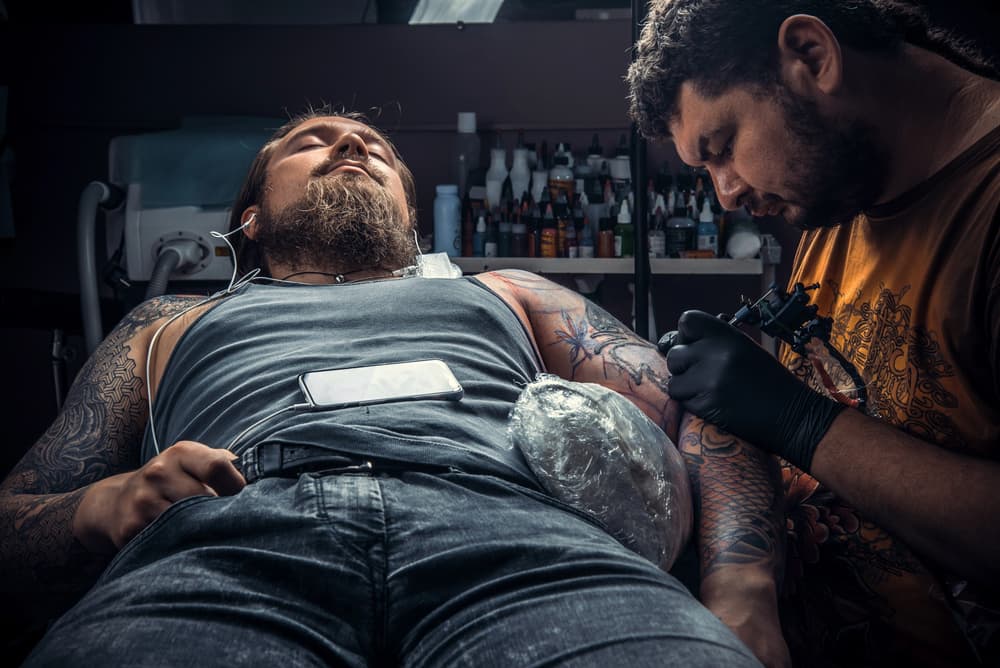
If you're searching for blackwork tattoo artists in Fayetteville, here's the short version: the style is everywhere right now, but not every artist who says they can do it actually has the hand for it. Blackwork lives or dies on solid black saturation, clean line control, and an eye for how a design sits on a moving body. Get one of those wrong and it shows for the life of the tattoo.
At ATS Fayetteville, we run a shop of 16+ artists, and at any given time several of them are working in blackwork as part of their regular rotation. That's not a marketing line — it means when you walk in, you're not stuck hoping the one guy who "does blackwork" has an opening this month.
What Blackwork Actually Is
Blackwork covers a lot of ground. Bold traditional-style black fill, geometric patterns, illustrative pieces built entirely from black ink, dotwork shading, and heavy linework designs all fall under the umbrella. What ties them together is the reliance on black ink alone — no color, no gradient tricks to hide weak technique.
That's exactly why blackwork is unforgiving. Color can distract the eye from an uneven line or a patchy fill. Solid black can't. Every pass of the machine is visible, which is why the artists who are genuinely good at it tend to specialize in it rather than treat it as one more style on the menu.
If you're scrolling through reference photos before your consult, pay attention to how even the black fields look and whether the linework holds a consistent weight from start to finish. That consistency is the tell.
What to Look For in a Blackwork Artist's Portfolio
Before you book anything, pull up the artist's actual work — not just their best shot, but a range of pieces.
Look for these three things:
- Saturation. Solid black areas should look uniformly dark, not gray or patchy, especially in photos taken well after healing. - Line consistency. Straight lines should stay straight, and curves should stay smooth, even on pieces that wrap around an elbow, calf, or ribcage. - Composition sense. Good blackwork artists design pieces to follow the body's natural lines, not just drop a flat design onto skin and hope it works.
A strong portfolio will show you healed work, not just fresh ink under studio lighting. Fresh blackwork almost always looks sharp. Healed blackwork tells you the truth about an artist's fill technique.
Why This Matters More Around Fort Bragg
Fayetteville's tattoo scene runs differently than a lot of civilian markets because of who's walking through the door. Between soldiers coming off deployment, families relocating with PCS orders, and guys getting unit and memorial pieces, there's a steady demand for large-scale blackwork — half sleeves, back pieces, and coverups that need real black saturation to bury older ink.
Blackwork is also a common choice for cover-up work because dense black fill can neutralize a faded or poorly done tattoo underneath it more effectively than lighter styles. If you're looking at a cover-up gallery before your consult, notice how much of the original tattoo is actually hidden versus just softened. That distinction matters when you're deciding what's realistic for your own piece.
Military policy around tattoo placement and visibility also shifts depending on your branch and command, so if you're weighing a large blackwork piece on your neck, hands, or forearms, confirm with your command before you book rather than after.
The ATS Fayetteville Bench
This is the part that actually answers the question people are searching for. ATS Fayetteville isn't a shop built around one signature artist. It's built around depth — 16+ artists working across styles, with several capable of strong blackwork work at any given time.
That matters for a few practical reasons. If your first-choice artist is booked out, you're not stuck waiting months or settling for someone who's never done heavy black fill before. You can look at our operators (artists) page and pick based on whose linework and composition style actually matches what you want, rather than whoever happens to be free.
It also means the shop culture around blackwork is stronger. Artists who work near each other and see each other's black fill technique daily tend to push each other's consistency up. That's different from a shop where one person "does the black stuff" in isolation.
What Your Consult Should Cover
A real consult for a blackwork piece should go deeper than picking a design off a wall. Come ready to talk through:
- Size and placement, and how the piece will move with your body over time - Whether the design is better suited to solid fill, dotwork shading, or a mix of both - If it's a coverup, what's underneath and whether full black saturation is realistic for that spot
A good artist will tell you honestly if a design needs to be bigger than you were picturing. Blackwork designs often need more room than color work to keep the black fields from blurring together as they heal, and an artist who's upfront about that upfront is doing you a favor, not upselling you.
Aftercare Notes for Heavy Black Fill
Blackwork pieces, especially ones with large solid areas, need the same basic aftercare discipline as any tattoo, keep it clean, keep it out of the sun during healing, and don't pick at it. Heavy black fill can look a little more raw or swollen in the early healing stages just because of the amount of ink laid down, which is normal and not a sign something's wrong.
If you're stationed near Fort Bragg and dealing with field time, PT, or gear rubbing against a fresh piece, talk to your artist about timing your appointment around your training schedule. For more detail on general healing practices, check our aftercare guide before your appointment, not after.
Book Your Blackwork Consult at ATS Fayetteville
If you're ready to move past scrolling and actually get this started, book a consult at ATS Fayetteville. Bring your reference images, be honest about placement and size, and let the artist tell you what the design actually needs to hold up long-term. That conversation is worth more than any amount of pre-appointment research on your own.
Stop by or call the Fayetteville studio near Fort Bragg to get on the schedule with an artist whose black fill work matches what you're picturing.
Free Consultation
Have A Tattoo Idea?
Start a Tattoo Talk and a real ATS artist answers — free, no retainer, no commitment.


