
Can You Get Tattoos in the Military? Fort Bliss History 1916-2000
Yes, for soldiers at Fort Bliss, tattoos have been a part of the culture since the base opened in 1916. The question isn’t whether you can get tattooed in the military — it’s understanding how military tattoo culture evolved at America’s largest training installation.
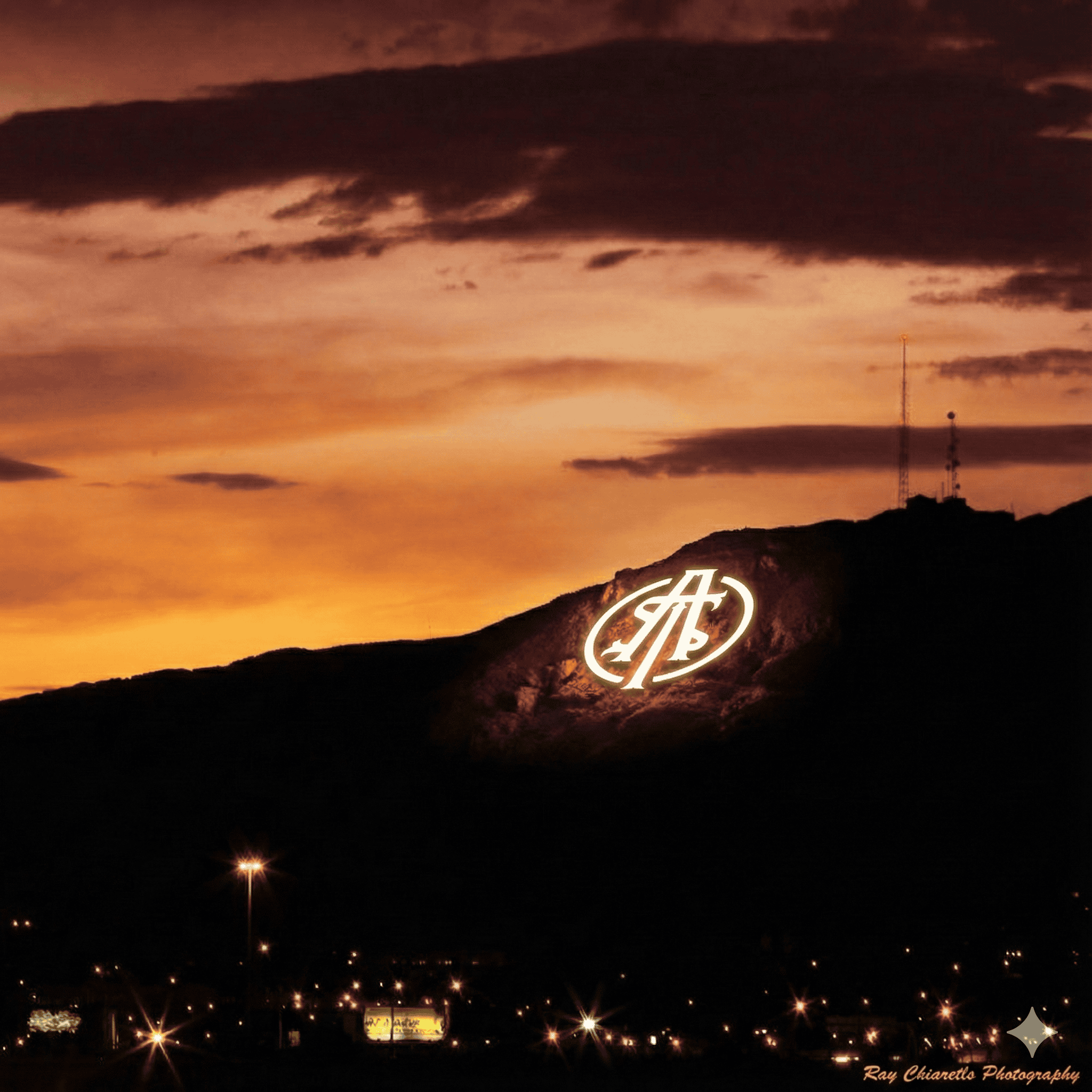
Fort Bliss sits on 1.12 million acres where the Chihuahuan Desert meets El Paso. For over a century, soldiers have marked their service with ink both on-base and in the bustling border town next door.
The Early Years: Border Patrol and Pancho Villa (1916-1920s)
Fort Bliss opened in 1916 during the Mexican Border Campaign. General John J. Pershing stationed troops here to chase Pancho Villa, and those early cavalrymen brought tattoo traditions from older posts.
Hand-poked tattoos were common among enlisted men. Simple designs — unit numbers, eagles, flags — done with improvised equipment in barracks after lights out.
El Paso’s red-light district on South El Paso Street catered to soldiers on weekend passes. Tattoo artists worked alongside saloons and brothels, inking everything from regimental crests to names of sweethearts back home.
The Army didn’t regulate tattoos then. Officers looked the other way as long as soldiers showed up for duty Monday morning.
World War II Expansion (1940s)
Fort Bliss exploded during WWII. The post became a major anti-aircraft training center, processing over 100,000 soldiers through artillery and radar schools.
With that many troops rotating through, El Paso’s tattoo scene boomed. Juarez, just across the Rio Grande, offered cheap ink and looser regulations than Texas shops.
Popular designs included:
– Unit patches and division insignia
– Pin-up girls and patriotic imagery
– “Death Before Dishonor” and military mottos
– Maps showing overseas deployments
German prisoners of war held at Fort Bliss even set up makeshift tattoo operations. POW camps weren’t supposed to allow tattooing, but guards often traded cigarettes for simple German designs.
Cold War Era: Missile Defense and Regulations (1950s-1980s)
Fort Bliss became home to the Army’s air defense mission in the 1950s. Nike missile batteries ringed El Paso, and soldiers trained on increasingly sophisticated radar and missile systems.
The Army started paying attention to tattoos around this time. Not banning them, but discouraging “excessive” or “inappropriate” designs. What counted as excessive? Usually anything visible in dress uniform.
El Paso tattoo shops clustered around the base gates and downtown.
Popular spots included:
– Shops along Paisano Drive near the main gate
– Downtown parlors that served both soldiers and civilians
– Border establishments that offered “authentic Mexican tattooing”
Designs shifted with the times. Korean War vets got maps of the peninsula. Vietnam-era soldiers chose more complex pieces — jungle scenes, helicopters, unit mottos like “Death From Above.”
The All-Volunteer Army Era (1970s-1980s)
When the draft ended in 1973, the Army worked harder to attract recruits. Fort Bliss became a more professional environment, but tattoo culture stayed strong.
Advanced Individual Training (AIT) soldiers had time between classes. Many got their first military tattoos in El Paso before shipping to their permanent duty stations.
Popular designs included:
– Air defense artillery crossed cannons
– Patriot missile imagery (after 1981)
– Unit crests from the 1st Armored Division
– Personal touches — hometowns, family names
The Army issued its first official tattoo policy in 1980. Nothing above the collar line, nothing below the wrist, nothing “extremist or indecent.” Most Fort Bliss soldiers already followed these unwritten rules.
Border Culture and Cross-Border Tattooing
Fort Bliss’s location made it unique among Army posts. Soldiers could walk to Mexico for weekend liberty. Juarez offered different tattoo styles — more traditional Mexican imagery, religious themes, Day of the Dead designs.
Some soldiers got matching tattoos with Mexican girlfriends or wives. Cross-cultural designs became common — American eagles perched on Mexican flags, military insignia mixed with Catholic imagery.
El Paso shops learned to cater to military customers. They stocked flash sheets with unit patches, kept military calendars to track paydays, offered payment plans for larger pieces.
Border tensions occasionally affected the tattoo scene. When drug violence flared in Juarez, commanders restricted cross-border travel. El Paso shops saw business boom during these periods.
The 1990s: Professional Army Standards
By the 1990s, Fort Bliss housed major units including elements of the 1st Armored Division and the 3rd Armored Cavalry Regiment. The post-Cold War Army emphasized professional appearance more than ever.
Fort Bliss Tattoo regulations tightened slightly, but enforcement remained inconsistent. Soldiers learned to keep controversial pieces covered during formations and official duties.
Popular designs reflected the era:
– Gulf War imagery for Desert Storm veterans
– Increasingly complex color work as tattoo art advanced
– Tribal designs that became trendy in civilian culture
– Unit-specific pieces for deploying soldiers
Fort Bliss Tattoos Today: American Tattoo Society
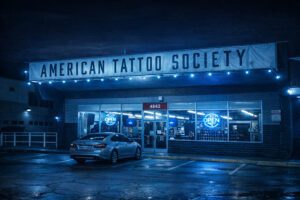
American Tattoo Society of Ft Bliss El Paso
American Tattoo Society operates near Fort Bliss, continuing the tradition of serving soldiers with quality ink. We understand military tattoo culture because we’ve been part of it for years.
Our artists know current Army regulations. We work with soldiers to design pieces that meet standards while honoring service. Whether it’s your first tattoo or adding to a sleeve, we respect the tradition you’re joining.
James Vaughn, our Inkmaster Season 1 artist based at ATS Fayetteville, started his career near military installations. That military connection runs deep through our entire organization.
The Tradition Continues
Can you get tattoos in the military? Absolutely. Fort Bliss soldiers have been doing it for over 100 years. The designs change, the regulations evolve, but the tradition endures.
Today’s soldiers at Fort Bliss train on Patriot missile systems that their grandfathers could never imagine. But they still mark their service the same way — with permanent reminders of where they served and who they served with.
That’s the real answer to whether you can get tattoos in the military. It’s not just allowed — it’s part of the culture. And at Fort Bliss, tattoos have been part of the culture since Day One.